














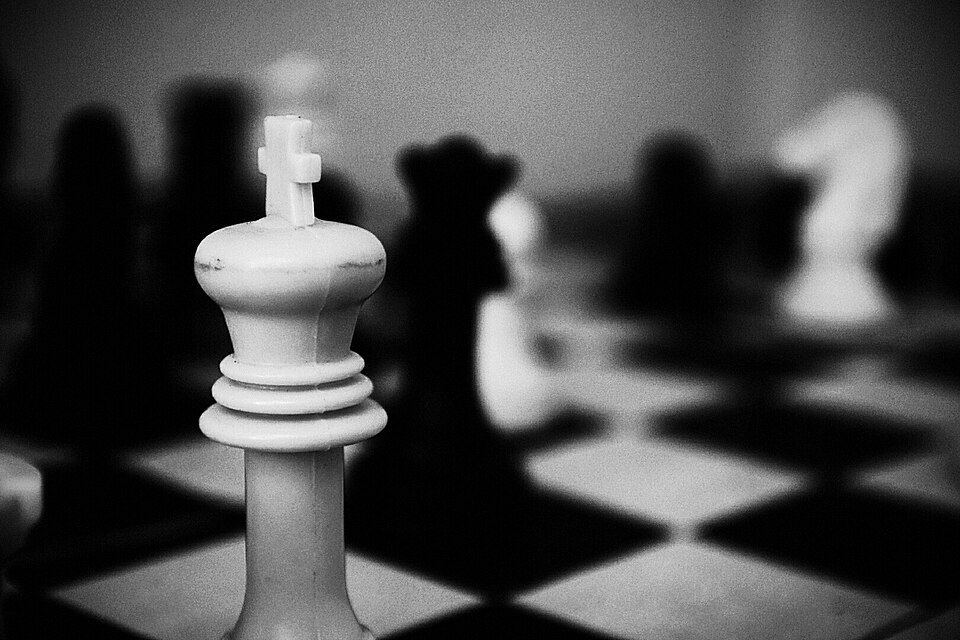
Chess looks like a quiet game. Two people, sixty-four squares, no dice, no hidden cards. But underneath that calm surface is one of the most absurd numbers in human history, a thousand years of royal history, and a rivalry between man and machine that genuinely shook the world. Buckle up.
The number that breaks your brain
Here’s the part that sounds like a bad physics joke, except it’s true: there are more possible chess games than atoms in the observable universe. Mathematicians estimate the number of possible chess games at around 10^120 — a 1 followed by 120 zeros. The number of atoms in the observable universe is “only” around 10^80. That means the space of possible chess games dwarfs all the matter that exists, everywhere, by an almost unfathomable margin.
Now stretch that thought a little further. Every single move you make on the board splits the game into a brand new branch of possibility — the move you didn’t make still “exists” as a ghost version of the game that could have happened. It’s not far off from the pop-culture idea of a multiverse, where every decision peels off a new timeline. Chess is, in a very real sense, a tiny universe of forking timelines compressed into a wooden board.
Born in royal courts: the medieval origins of chess
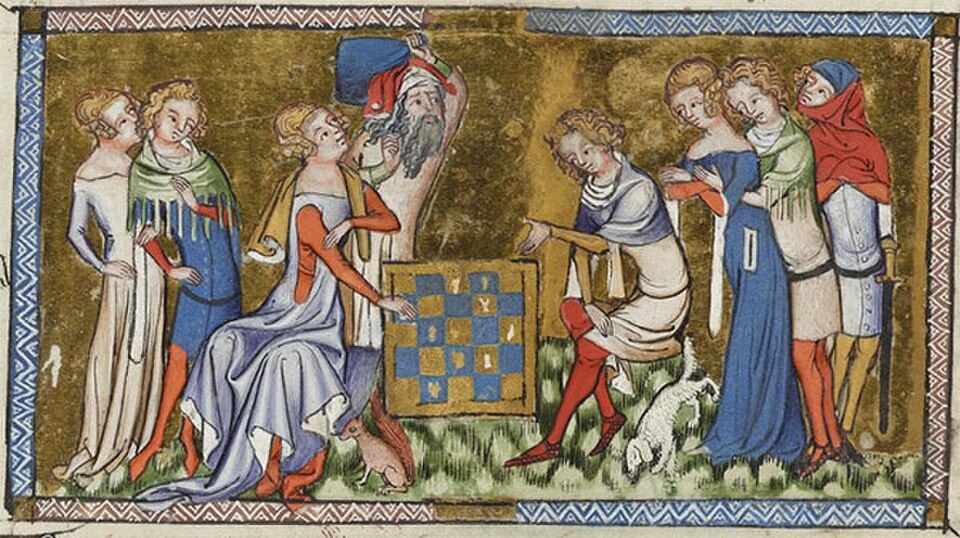
Chess didn’t start as the game you know today — it evolved across continents and centuries. The earliest ancestor, a game called chaturanga, appeared in India around the 6th century CE, played with pieces representing infantry, cavalry, elephants, and chariots. From there it traveled to Persia, where it became shatranj, and eventually spread through the Islamic world into medieval Europe, likely arriving via Moorish Spain around the 9th or 10th century.
For hundreds of years, medieval chess was a much slower game than the one played today — the piece we now call the queen could only move one square diagonally, and the bishop was similarly limited. The dramatic glow-up happened in Spain and Italy around the late 15th century, when the queen and bishop were given the sweeping powers they have now, turning chess into a faster, sharper, far more aggressive game almost overnight (chess historians sometimes call this shift “Mad Queen chess”). From there, the rules slowly standardized over the following centuries, culminating in the 19th century with uniform pieces, formal tournaments, and the first recognized World Chess Championship in 1886.
Chess goes digital: chess.com and the rise of online ranks
Fast-forward to today, and chess has had a second life entirely online. Platforms like chess.com turned a game that used to require a board, a clock, and a willing opponent into something you can play from your phone in thirty seconds, against anyone on Earth. The pandemic and a wave of chess content on YouTube and Twitch (including a certain Netflix show about a fictional prodigy) sent millions of new players flooding onto these platforms.
That growth created a whole new vocabulary of “rank.” Online platforms use rating systems based on the Elo system, the same math used by the official World Chess Federation (FIDE) for over-the-board tournaments. Roughly speaking, official FIDE titles work like this:2200+ — Candidate Master (CM)
2300+ — FIDE Master (FM)
2400+ — International Master (IM)
2500+ — Grandmaster (GM), the highest title in chess
Anything above roughly 2700 is informally called “super-grandmaster” territory — a club so small it includes maybe 30-40 humans alive at any given time. Online ratings on chess.com tend to run a bit differently and often feel inflated compared to FIDE numbers, but the shape of the pyramid is the same: most players sit somewhere between 400 and 1200, a strong club player is somewhere around 1800-2000, and anything north of 2000 puts you in rare company.
Magnus Carlsen: the king of the modern era
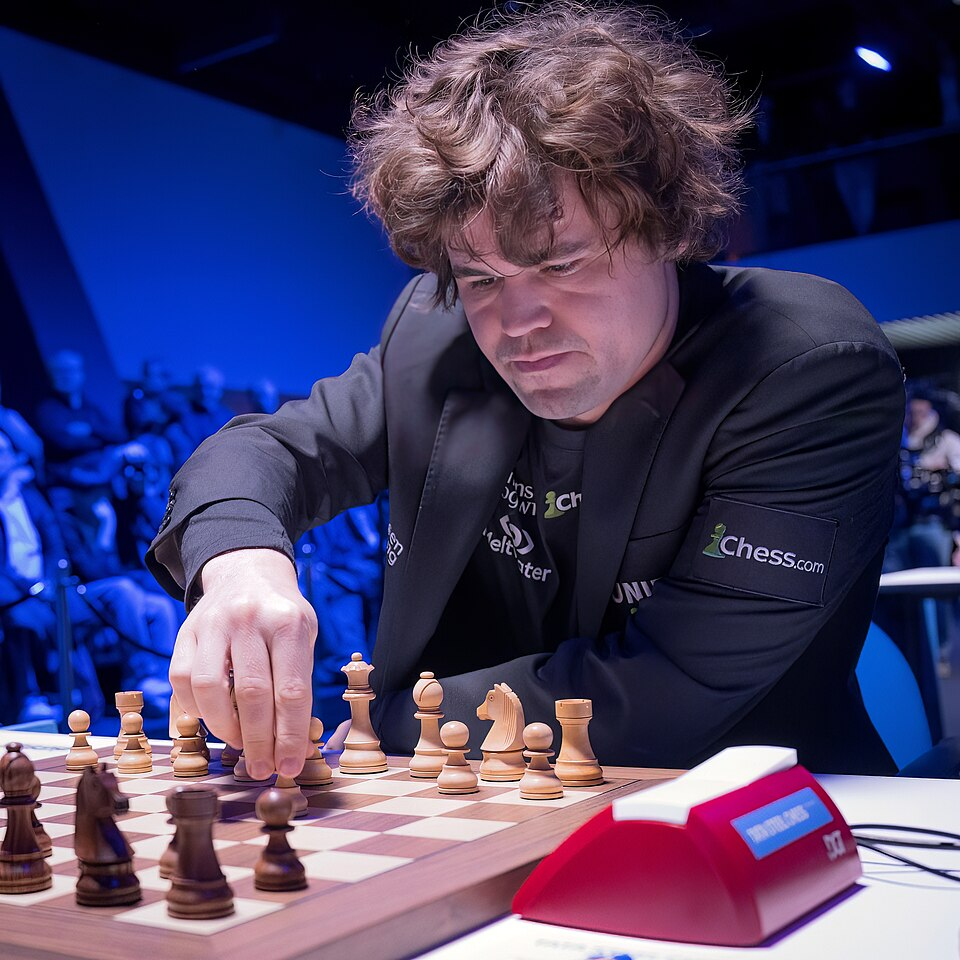
If there’s one name that defines the current era of chess, it’s Magnus Carlsen. The Norwegian grandmaster has held the world’s No. 1 ranking almost continuously since July 2011 — the longest stretch at the top in chess history. His peak classical rating of 2882, reached in 2014, remains the highest rating ever recorded by a human player.
As of 2026, Carlsen’s classical FIDE rating sits around 2841, and he holds the world No. 1 spot in rapid (2832) and blitz (2869) as well — meaning he’s simultaneously the best in the world across every major time control. He won the World Chess Championship five times in a row (2013, 2014, 2016, 2018, and 2021), but in a surprising move, he chose to step away from defending the classical world title in 2023, saying the match format no longer motivated him. That title now belongs to a new generation: India’s Gukesh Dommaraju became World Champion in 2024 at just 18 years old. Carlsen, meanwhile, hasn’t slowed down — in February 2026 he won the inaugural FIDE Freestyle Chess World Championship, and in doing so reached a staggering rating of 2909, the first time any human has ever crossed the 2900 barrier in a classical chess format. He remains, by rating, the strongest chess player who has ever lived.
Garry Kasparov: the legend who came before
Before Carlsen, there was Garry Kasparov — and for over a decade, he was simply considered the greatest chess player alive. The Soviet-born grandmaster became World Champion in 1985 at age 22, the youngest ever at the time, and held the title until 2000. His aggressive, hyper-calculating style of play dominated the chess world, and his peak rating of 2851 stood as the highest ever recorded for almost two decades, until Carlsen finally surpassed it. Kasparov is widely regarded as one of the two or three greatest players in the history of the game.
Man vs. machine: Kasparov vs. Deep Blue
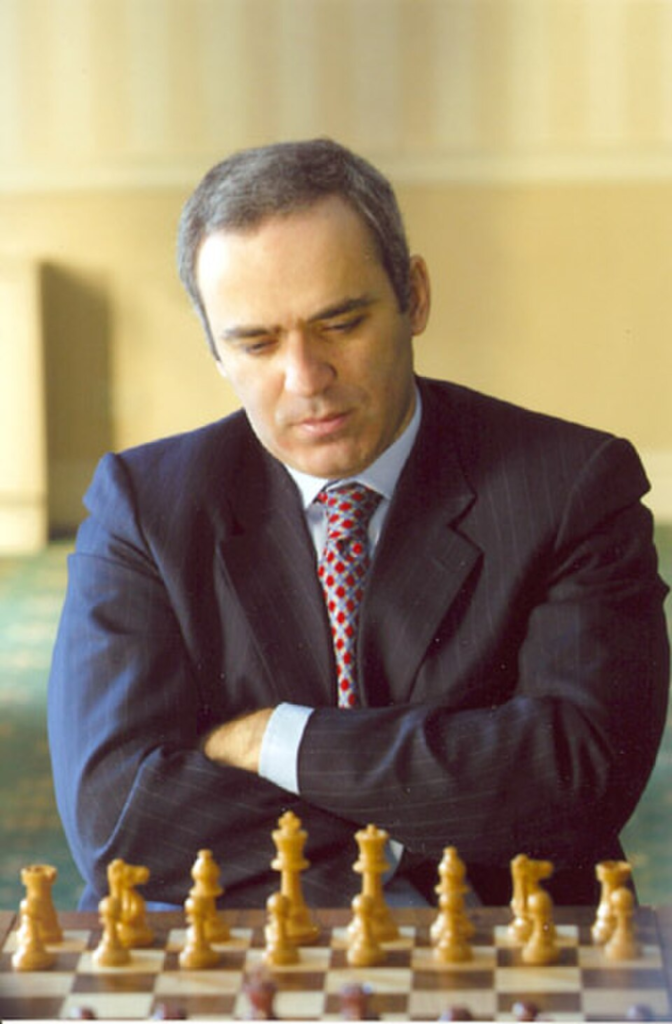
Kasparov’s name, though, is forever tied to a moment that had nothing to do with another human opponent. In 1996, IBM built a chess-playing supercomputer named Deep Blue and pitted it against Kasparov in a six-game match in Philadelphia. Kasparov won, 4-2 — but not without a scare: Deep Blue won the very first game, marking the first time a computer had beaten a reigning world champion in a single tournament game.
IBM didn’t give up. The team rebuilt and upgraded the machine, nicknamed “Deeper Blue,” and challenged Kasparov to a rematch in New York City in May 1997. This time, the result shocked the world. After Kasparov won game one, the match swung back and forth through three draws, until the deciding sixth game: Deep Blue sacrificed a knight early on, Kasparov’s position collapsed, and he resigned after just 19 moves — in barely over an hour. The final score: Deep Blue 3½, Kasparov 2½. It was the first time a computer had ever defeated a reigning World Chess Champion in a full match under tournament conditions.
The aftermath was almost as dramatic as the games themselves. A visibly shaken Kasparov accused the IBM team of cheating, suggesting that human grandmasters had secretly fed the machine moves during the match — an accusation IBM denied, and one that has never been substantiated. IBM dismantled Deep Blue shortly after, declining Kasparov’s request for a rematch. The match became the subject of a documentary, Game Over: Kasparov and the Machine, and is still remembered as the moment the public truly grasped that machines could out-think humans at something deeply intellectual — a psychological turning point on the road to the AI-saturated world we live in today.
Why chess still blows minds
Put it all together, and chess stops looking like “just a board game.” It’s a puzzle with more possible solutions than there are atoms in the universe, born in royal courts more than a thousand years ago, reshaped by a queen who suddenly learned to fly across the board, now played by millions on glowing screens chasing little numbers next to their names — and somewhere in the middle of all that history, a machine quietly proved it could out-calculate the smartest human alive. Quiet game, indeed.