


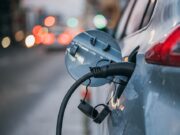




China’s electric vehicle industry just crossed a new line. In February 2026, battery giant CATL and state-owned automaker Changan unveiled the Changan Nevo A06, the world’s first mass-produced passenger car running on a sodium-ion battery instead of lithium. It won’t be the last. BYD, BAIC, and several other Chinese manufacturers are racing to follow, betting that sodium — a cheap, abundant element found in ordinary salt — can do to electric cars what it once seemed only lithium could do.
The shift matters because lithium prices have been volatile and Chinese brands are locked in a brutal price war, with dozens of EVs already selling for under $15,000. Sodium could push prices even lower.
Why Sodium, Why Now
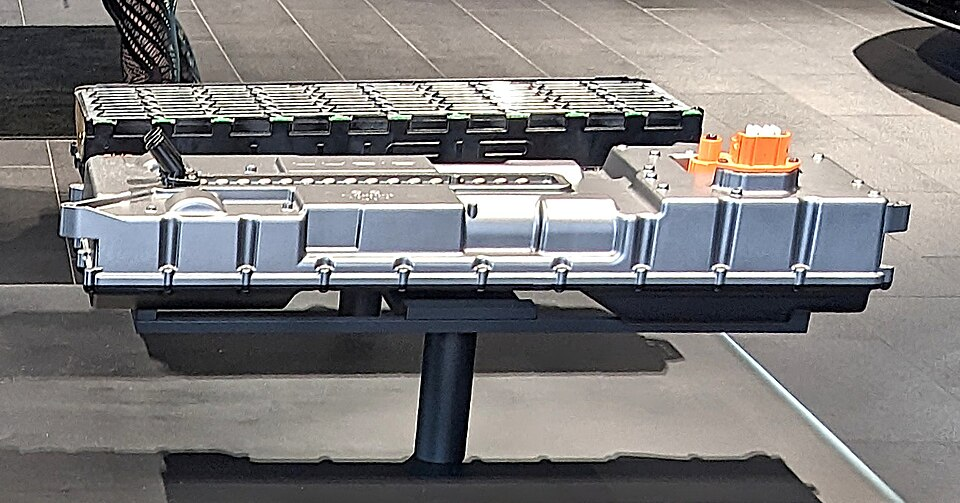
Lithium carbonate prices in China spiked nearly 190% between mid-2025 and April 2026, squeezing battery margins across the industry. Sodium, by contrast, is roughly 500 times more abundant in the Earth’s crust and doesn’t require the same mining-intensive supply chains for cobalt, nickel, or lithium.
CATL’s “Naxtra” sodium-ion cells, the product of a decade of research and nearly 10 billion yuan (about $1.4 billion) in investment, reach an energy density of 175 Wh/kg — close to today’s lithium iron phosphate (LFP) packs. The Changan Nevo A06’s 45 kWh sodium pack delivers a CLTC-rated range of over 400 km (about 249 miles), with CATL targeting 500–600 km in future versions.
The Pros of Sodium-Ion Batteries
- Cheaper raw materials. Sodium is abundant and cheap, insulating automakers from lithium price swings.
- Extreme cold-weather performance. CATL says its sodium cells retain more than 90% capacity at -40°C and can still discharge power at -50°C, nearly tripling the output of comparable LFP batteries at -30°C.
- Faster charging. Some sodium prototypes have already demonstrated 80% charge in under 15 minutes, with one BAIC variant claiming a full charge in about 11 minutes.
- Better safety. Sodium cells have shown no fire or explosion in crush, drill, and saw tests, and they’re widely considered less prone to thermal runaway than lithium-ion packs.
- Lighter environmental footprint in extraction and recycling compared with lithium mining.
The Cons
- Lower energy density. Sodium batteries still trail top-tier lithium-ion and even standard LFP cells, meaning shorter range for the same battery size and weight.
- Range still behind lithium. The first sodium EVs offer roughly 400 km of range versus 500–700 km for comparable lithium models — a gap that matters for highway driving.
- New, unproven technology. Mass production only began in 2026; there’s limited long-term data on degradation, durability, or how these batteries perform after years of daily use.
- Limited scale, for now. Global sodium-ion battery shipments reached just 9 GWh in 2025, a fraction of the lithium-ion market, so manufacturing costs haven’t yet hit their full economies of scale.
China’s Best-Selling Cars: Models, Brands, and Prices
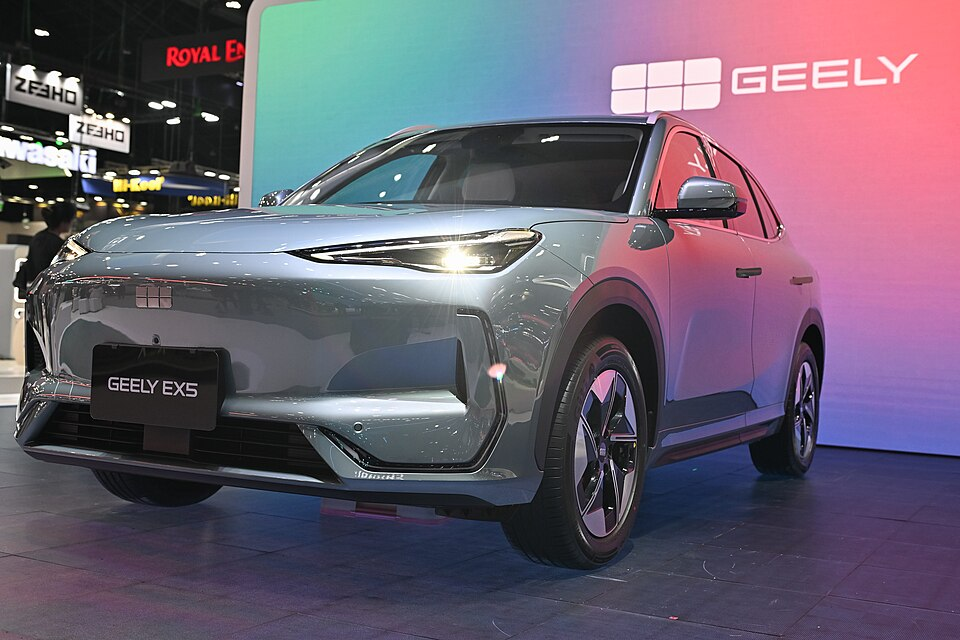
China’s auto market has flipped almost entirely to electric and hybrid models. In May 2026, for the first time ever, all ten best-selling passenger vehicles in the country were New Energy Vehicles (NEVs). Here are the models leading the charts, with approximate prices in yuan (RMB) and US dollars:
- Geely Xingyuan (also sold abroad as the Geely EX2) — China’s best-selling EV for over a year. Starting price: 61,800–94,800 yuan (≈ $9,100–$14,000).
- Tesla Model Y — the only foreign nameplate to consistently crack China’s top five. Price range: 263,500–339,000 yuan (≈ $37,000–$47,300).
- Xiaomi YU7 — the smartphone maker’s electric SUV, now offered from a stripped-down “Standard Edition” to a 990-horsepower “GT.” Price range: 233,500–389,900 yuan (≈ $34,300–$57,300).
- Xiaomi SU7 — Xiaomi’s sedan, including the high-performance SU7 Ultra. Price range: 229,900–529,900 yuan (≈ $32,100–$74,000).
- BYD Seagull (sold overseas as the Dolphin Surf/Dolphin Mini) — one of the cheapest EVs with LiDAR in the world. Price range: 69,900–97,900 yuan (≈ $10,300–$14,400).
- BYD Yuan UP (sold overseas as the BYD Atto 2) — compact electric crossover. Price range: 74,800–119,800 yuan (≈ $10,400–$16,700).
- Li Auto i6 — an all-electric crossover from one of China’s few profitable EV makers. Starting price: 249,800 yuan (≈ $35,000).
- Changan Nevo A06 — the sedan now making history with its sodium-ion option. Lithium versions: 109,900–159,900 yuan (≈ $15,400–$22,400); the sodium-powered variant is expected to undercut even that.
The World’s Best-Selling Cars
Globally, the picture looks different — gasoline and hybrid vehicles still dominate, though Chinese EVs are climbing fast. According to 2025–2026 industry tracking data, the world’s top-selling models were:
- Toyota RAV4 (hybrid SUV) — reclaimed the global sales crown from Tesla.
- Toyota Corolla
- Tesla Model Y
- Ford F-Series
- Honda CR-V
- Chevrolet Silverado
- Hyundai Tucson
- Toyota Camry
- Volkswagen Tiguan
- Kia Sportage
Notably, the Geely Xingyuan and the Wuling Hongguang Mini EV have broken into the global top 15 — a sign of how fast low-cost Chinese EVs are scaling worldwide, even without access to the US market.
What It Means for the American Car Market
Here’s the uncomfortable math for Detroit: a Xiaomi YU7 Standard Edition costs about $34,300 in China and outranges the Tesla Model Y, while undercutting it by roughly $4,350. A BYD Seagull with LiDAR-based driver assistance sells for around $13,400 — features that, in the US, are usually reserved for luxury trims. On pure specs and price, Chinese automakers are simply ahead.
But almost none of this technology can legally reach American driveways anytime soon. The US already imposes a 100% Section 301 tariff on Chinese-made EVs, on top of a standard 2.5% auto duty and a 25% global auto tariff layered on more recently — a combination that would push a $10,000 BYD Seagull past $26,000 if anyone tried to import one. On top of tariffs, a bipartisan bill introduced in Congress in May 2026, the Connected Vehicle Security Act, would ban the import, sale, and operation of Chinese-made connected vehicles, software, and hardware outright — software restrictions kicking in by 2027, hardware by 2030. The bill has backing from the United Auto Workers, General Motors, and Ford, who argue that cheap, heavily subsidized Chinese EVs — and the data they collect — pose both an economic and a national-security threat.
So while sodium batteries could make Chinese EVs even cheaper, that price drop is unlikely to reach the US directly. The more realistic scenario is indirect: cheaper sodium and lithium batteries from Chinese suppliers like CATL could still filter into American-made vehicles through licensing deals and joint ventures (Changan, for instance, is already a manufacturing partner of Ford in China), gradually pushing down battery costs for US automakers even if the finished Chinese cars themselves stay locked out.
It’s also worth putting the “China is ahead” narrative in perspective. Chinese EVs are new, and so is sodium-ion technology itself — neither has the multi-decade track record that defines reliability rankings. American (and Japanese) brands like Toyota, Honda, and Ford still dominate long-term dependability studies, with vehicles like the Corolla, Camry, and F-Series built on platforms refined over 20, 30, even 50 years. Resale value, parts availability, and nationwide service networks remain advantages that newer Chinese brands haven’t had time to build. China may be winning on price and gadgetry today; whether that holds up over 10 years of ownership is still an open question.