





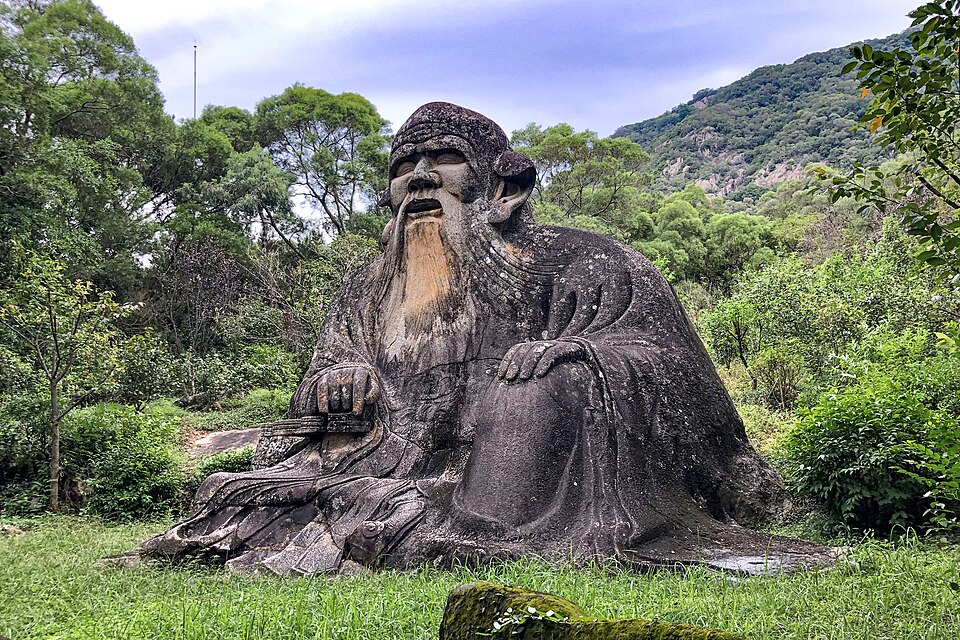
Picture this: a tired old man, fed up with city life and court politics, decides to leave it all behind. He doesn’t take a horse or a carriage — he hops on an ox and rides toward the western frontier. Along the way, a border guard stops him and basically says, “Before you disappear forever, mind writing down some of that wisdom for us?” What came out of that roadside pit stop is one of the most translated texts on the planet, right up there with the Bible. That’s the legend of Lao Tzu.
So Who Was This Guy?
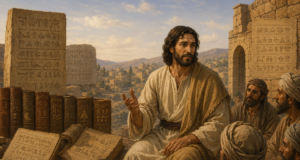
Lao Tzu (also spelled Laozi, which roughly translates to “Old Master”) is believed to have lived around the 6th century BCE, during China’s Zhou dynasty. According to the most widely accepted account, he worked as the keeper of the royal archives — basically the guy in charge of the scrolls and records of the kingdom. A quiet desk job, in theory.
There’s even a famous (if probably embellished) story about a meeting between Lao Tzu and Confucius, the other heavyweight of ancient Chinese philosophy, who supposedly came to ask him questions about proper rituals and ceremony. Legend has it Lao Tzu wasn’t exactly welcoming, and basically told him to drop the arrogance and self-importance — which gives you a pretty good preview of the philosophy he was about to spend his life building.
Because that’s exactly what Lao Tzu did: he’s credited as the founder of Taoism, a way of thinking built around the opposite of hustle, ego, and forcing things to happen. At the center of it is the Tao (“the Way”) — a force believed to flow through everything in the universe, one you can only follow if you stop fighting it. That’s where the idea of wu wei comes from, often translated as “non-action.” It doesn’t mean doing nothing — it means acting without unnecessary resistance, the way water flows around a rock instead of smashing straight into it.
The Legend of the Ox: How He Disappeared
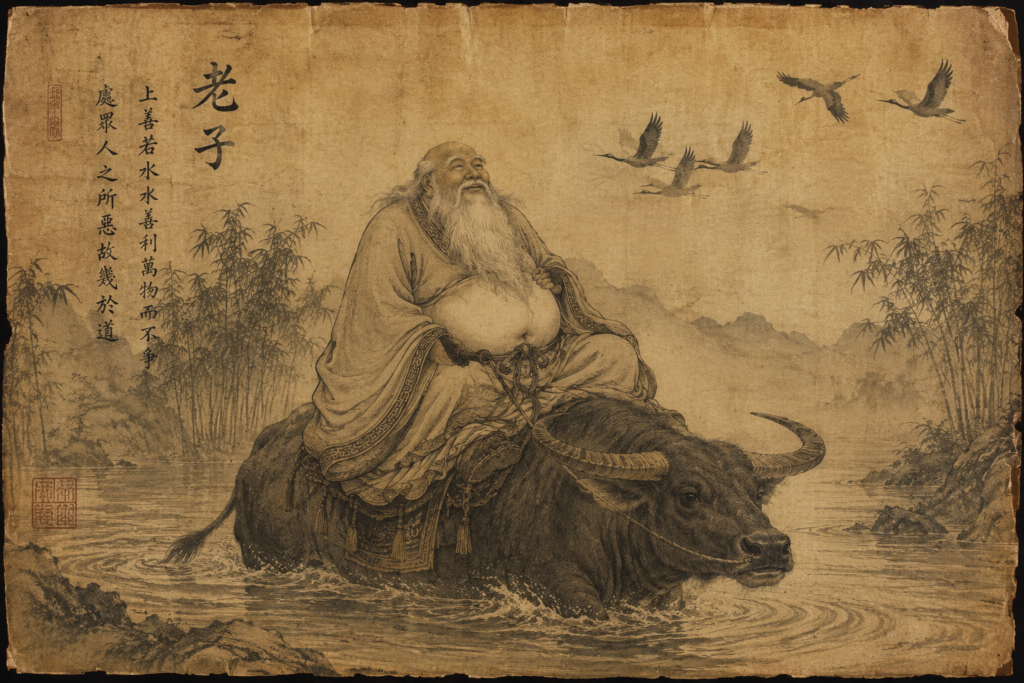
The best part of the story — and the strangest — is the ending. Disillusioned with the corruption and chaos of court life, Lao Tzu reportedly decided to abandon it all and head west, toward the mountains, riding a water buffalo (some versions say an ox).
When he reached Hangu Pass, the last checkpoint before the desert, he ran into a guard named Yin Xi. The guard immediately sensed this wasn’t just any traveler passing through, and refused to let him cross the border without first writing down everything he knew. So Lao Tzu reportedly sat right there at the checkpoint and wrote, in one sitting, the roughly 5,000 characters that would become the Tao Te Ching (“The Book of the Way and Its Virtue”).
Once he handed over the text, he rode through the gate and kept going — disappearing over the horizon, never to be seen again. No one knows what happened to him after that. Some versions of the legend say he became immortal; others say he simply dissolved back into the Tao itself, the very force he spent his life describing.
What he left behind is a short book full of lines that sound simple on the first read and get stranger — in the best way — every time you go back to them. Lines like “he who conquers others is strong, but he who conquers himself is mighty.” More than 2,500 years later, people all over the world are still stopping to read a text written in a hurry by an old man who just wanted to leave.